

A thank-you email is a practical default after an interview: send it on the interview day or the following day, and no later than 48 hours afterward. Knowing how to write a thank you email after an interview means keeping it brief, personal, and focused on the conversation, not choosing a clever way to get noticed.
It’s understandable to wonder whether an email, call, or message is most appropriate. Email is common and professional. If the interviewer has been communicating with you through another platform, a thank-you message there can also work.
This guide explains when to send your note, how to address one interviewer or a panel, and how to shape a clear message with a useful template. You’ll learn what to include, how to express continued interest without overdoing it, and how to follow up confidently.
Key Takeaways
- Make your thank-you message specific by referring to a meaningful point from the conversation.
- Use a simple structure: express appreciation, reinforce your interest, and offer any further information the interviewer may need.
- For a panel interview, choose between sending personalized notes and writing one message to the group; a primary interviewer can be your point of contact.
- Keep the message concise and polished, then track your interview notes and next steps to stay organized throughout your job search.
1. When Is The Best Time To Send Your Thank You?
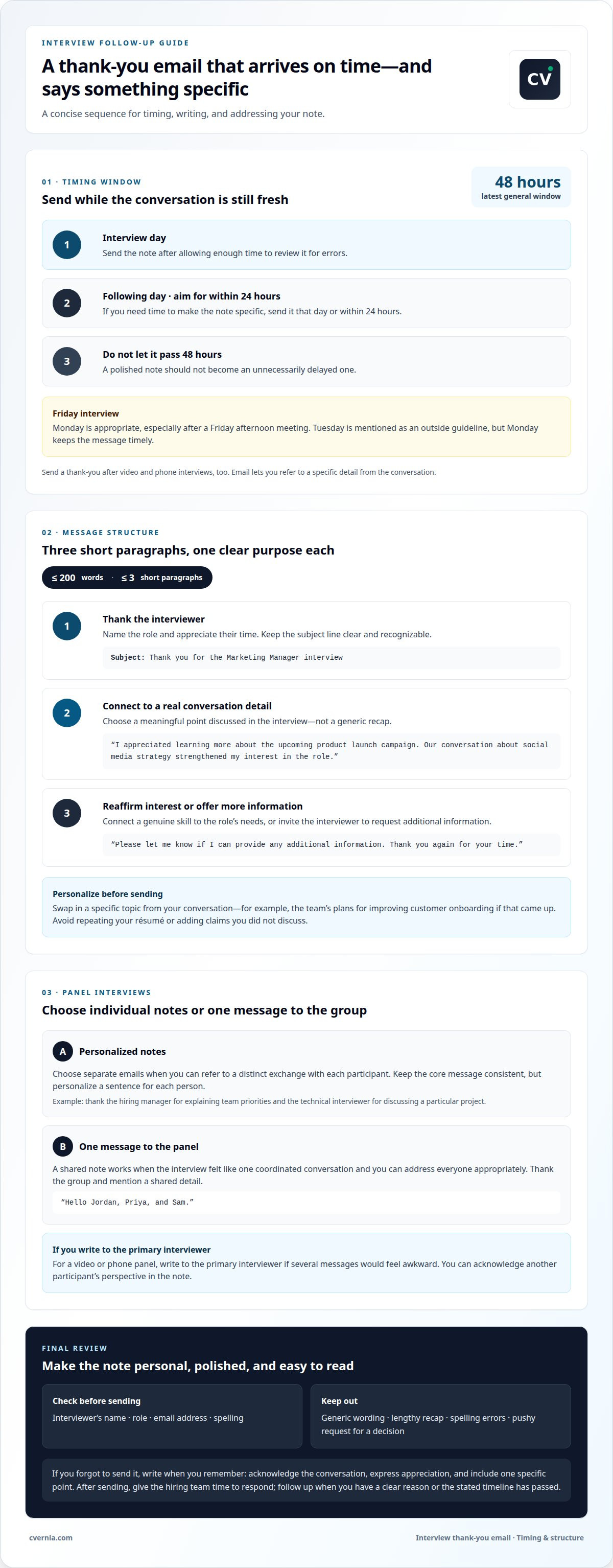
Send your interview thank-you email promptly, while the conversation is still fresh. Send your interview thank-you email promptly, after allowing enough time to review it for errors. If you need more time to make it specific, send it that day or within 24 hours. Don’t let a polished note turn into an unnecessarily delayed one.
For a Friday interview, Monday is appropriate, especially after a Friday afternoon meeting. Another general guideline is to send by Tuesday at the latest, but Monday keeps your message timely. A handwritten note takes time to arrive, so send it soon enough to reach the interviewer within a day or two.
Yes, send a thank-you email after a video or phone interview, just as you would after an in-person meeting. Email gives you a direct way to thank the interviewer and refer to a specific detail from your conversation, such as a project discussed during a video call.
Before sending, check the interviewer’s name, role, and email address. Avoid a generic message, spelling errors, a lengthy recap, or a pushy request for a decision. Keep your note brief, enthusiastic, and connected to your discussion. For example, mention a challenge the interviewer described and your interest in contributing to that work.
If you forgot to send your note, it’s still appropriate to write when you remember. Acknowledge the conversation, express your appreciation, and include one specific point from the interview rather than drawing attention to the delay. Keep the message professional and focus on what you want to say.
After sending your note, give the hiring team time to respond. Don’t send another message just to repeat your thanks. Follow up when you have a clear reason, such as responding to a request or asking about next steps after the timeline the interviewer provided has passed.
2. A post-interview thank-you email template
Choose a subject line that makes your purpose clear. “Thank you for the interview, Marketing Manager” is professional and easy to recognize. “Thank you, Sarah” also works after a one-on-one conversation.
Keep the email to 200 words or fewer, with no more than three short paragraphs. Use each paragraph for a distinct purpose: thank the interviewer, connect to a discussion point, and reaffirm your interest or offer further information.
Subject: Thank you for the Marketing Manager interview
Hi Sarah,
Thank you for taking the time to speak with me about the Marketing Manager position. I appreciated learning more about the upcoming product launch campaign.
Our conversation about social media strategy strengthened my interest in the role. My experience with managing multi-channel campaigns would help me contribute to increasing brand awareness and user engagement.
Please let me know if I can provide any additional information. Thank you again for your time.
Best,
Alex Smith
Personalize the example details shown above before sending. For example, replace “social media strategy” with “the team’s plans for improving customer onboarding” if that came up in your interview. Connect a genuine skill to the role’s needs instead of repeating your résumé or adding claims you didn’t discuss.
Adapt the wording to fit your conversation. If the interviewer recommended a resource, briefly thank them for it. If you spoke with a recruiter, refer to the position and a key detail they shared. Keep the tone warm and professional, and proofread names, job titles, and spelling before sending.
To make specific follow-up easier, save interview details while they’re fresh with interview notes and attachment management.
3. Addressing a note to a primary interviewer
After a panel interview, you can send personalized notes to each participant or one message to the group. Choose individual emails when you can refer to a distinct exchange with each person. A shared note works when the interview felt like one coordinated conversation and you can address everyone appropriately. Either way, acknowledge the panel’s time and refer to the role you discussed.
Yes, separate thank-you emails are appropriate, especially when each interviewer shared different details. Keep the core message consistent, but personalize a sentence for each recipient. For example, thank the hiring manager for explaining the team’s priorities and the technical interviewer for discussing a particular project.
If you send individual notes, record each interviewer’s name and role during the meeting. Afterward, use the names and contact details they provided. When possible, asking for business cards can help you address each message correctly. For a video or phone panel, write to the primary interviewer and mention the other participants if sending several messages would feel awkward.
Use a direct greeting when you know the recipient’s name: “Hi Jordan,” works well in a professional email. If the conversation was more formal, “Dear Jordan Lee,” is another option. Don’t guess at a title or spelling. Check the name against the interviewer’s email signature or business card before sending.
For one message to the panel, address everyone by name if the list is manageable: “Hello Jordan, Priya, and Sam.” Include a shared detail, such as the discussion about the product launch, and thank everyone for their perspectives. If you’re writing to the primary interviewer, try: “Hi Jordan, thank you for coordinating today’s conversation. I appreciated hearing Priya’s perspective on the launch.” This recognizes the group without sending duplicate messages.
Make each note specific and relevant. A brief reference to what each interviewer discussed makes your thanks feel considered. Copying the same message and changing only the greeting can seem impersonal.
4. When should you send a thank-you email after an interview?
Use the interview’s end time as your starting point. Aim to send your message on the same day or the following day, and no later than 48 hours afterward. That timing gives you room to reflect on the discussion without letting your note become an afterthought.
A Friday afternoon interview is a practical exception: sending your note on Monday is appropriate. If the interview ends late, draft your message while the details are fresh, then review it before sending. A clear, accurate note matters more than a rushed email with the wrong name or role.
Plan your follow-up around the conversation. First, note the hiring timeline the interviewer gave you. Next, send your thank-you message promptly. Then wait until the stated update date has passed before asking about the decision. For example, if the interviewer says they’ll contact you after completing interviews, let that period pass before sending a status inquiry.
If the interviewer gave a specific date for an update and hasn’t contacted you, wait 48 hours after that stated time before sending a brief follow-up. Ask whether they need anything else to support your application. Keep this separate from your thank-you note: one expresses appreciation, while the later message checks on next steps.
If the interviewer didn’t share a decision timeline, following up within a week or two is reasonable. Hiring decisions can take a couple of weeks, so avoid sending repeated messages while the process is underway. Record the interview date, promised update, and any message you’ve sent in your calendar. That helps you follow up once with context instead of guessing or repeating your thanks.
For a Friday afternoon interview, don’t interpret a quiet weekend as a negative response. Send the thank-you on Monday, then use the employer’s stated timeline to guide any later check-in. You can organize your interview follow-ups so each message stays timely and purposeful.
CVernia
CVernia helps you organize interview preparation and application details in one career management platform. Use the Application Tracking Dashboard to track roles, interview stages, and next steps, so you can plan a timely thank-you message while keeping your other applications organized.
Turn to CVernia for support beyond a single email. Interview Preparation & Guidance helps you prepare for upcoming conversations, while CV Compatibility & ATS Analysis helps align your CV with job descriptions. Together, these tools support an organized application journey, from tailoring your materials to managing interviews and follow-ups.
Build a clear process for each opportunity, keeping notes and next steps connected to the right application. Explore CVernia’s career management platform to organize your job search.
Carry Your Professional Story Forward
A thoughtful follow-up is one part of a consistent professional story. Consider how the strengths you discuss in an interview also appear in your application materials. Knowing how to write a thank you email after an interview helps you continue the conversation with purpose and keep your message genuine and specific to the role.
As you prepare for future opportunities, CVernia’s tailored CV and cover letter tools help you shape application materials for the roles you pursue. Use them alongside your interview reflections to present your experience and the value you bring clearly at every stage of your job search.
For help organizing your next career steps, contact CVernia for career support. Take the next step with confidence and keep moving toward the opportunity that fits your goals.
Frequently Asked Questions
Should I Email, Call, Or Hit Them Up On Twitter?
Email is a common, appropriate way to thank an interviewer. If they’ve been communicating with you elsewhere, you can use that channel instead. A private message on a professional platform can suit an ongoing conversation, but avoid posting your thanks publicly on Twitter. Keep your message professional, and don’t call unless the interviewer invited phone contact or a call is already part of your exchange.
When Is The Best Time To Send Your Thank You?
Send your note within 24 hours of the interview, ideally after you’ve gathered your thoughts and reviewed it. If you interviewed across time zones, consider the recipient’s local working hours when choosing when to send. A brief delay to correct a name or tailor your message is better than sending a careless email immediately; aim to keep the note timely and accurate.
What should you include in a post-interview thank-you email?
Include a greeting using the interviewer’s name, a sincere thank-you, and a detail that identifies the conversation. Mention the position so your message is clear if the interviewer is meeting several candidates. You can also offer a relevant document if they requested it or it would answer an open question. Close with your name and a professional sign-off, not an unrelated personal update.
How do you write a thank-you email after a job interview?
To know how to write a thank you email after an interview, start with a specific detail from your notes, then connect it to your interest in the position. Use a warm, professional tone and edit out anything that reads like a second résumé. Before sending, confirm the recipient, subject line, role title, and any promised attachment. A final read aloud can catch awkward phrasing.


