

What if the rejection email sitting in your inbox is actually the most valuable asset in your current job search? It's natural to feel a sharp sting when you don't get the offer you wanted, especially after investing significant energy into the process. If you are wondering what to do with interview feedback that feels vague or discouraging, you aren't alone. You deserve a system that turns those moments of uncertainty into professional momentum.
This guide shows you how to transform critiques into a data-driven strategy for landing your next role with confidence. We will walk through how to decode cryptic recruiter comments, organize your interview notes for long-term growth, and refine your CV to address specific gaps. You'll learn how to treat every critique as a strategic data point rather than a personal failure. By the end, you'll have a clear action plan to update your materials and approach your next interview with a competitive edge. Let's turn your recent setbacks into your greatest strategic advantage.
Key Takeaways
- Apply the 24-hour rule to separate emotional responses from actionable insights, ensuring you approach every critique with a professional growth mindset.
- Discover exactly what to do with interview feedback by identifying recurring patterns in technical and cultural gaps through a systematic tracking approach.
- Refine your CV and cover letter strategy by translating interview critiques into strategic keyword updates that improve your alignment with future role requirements.
- Utilize smart reapplication detection to manage your application history, ensuring you never send an outdated or flawed version to the same employer twice.
- Craft high-impact follow-up messages that request specific examples of improvement areas, transforming a rejection into a networking bridge for future opportunities.
How to Receive and Process Interview Feedback Professionally
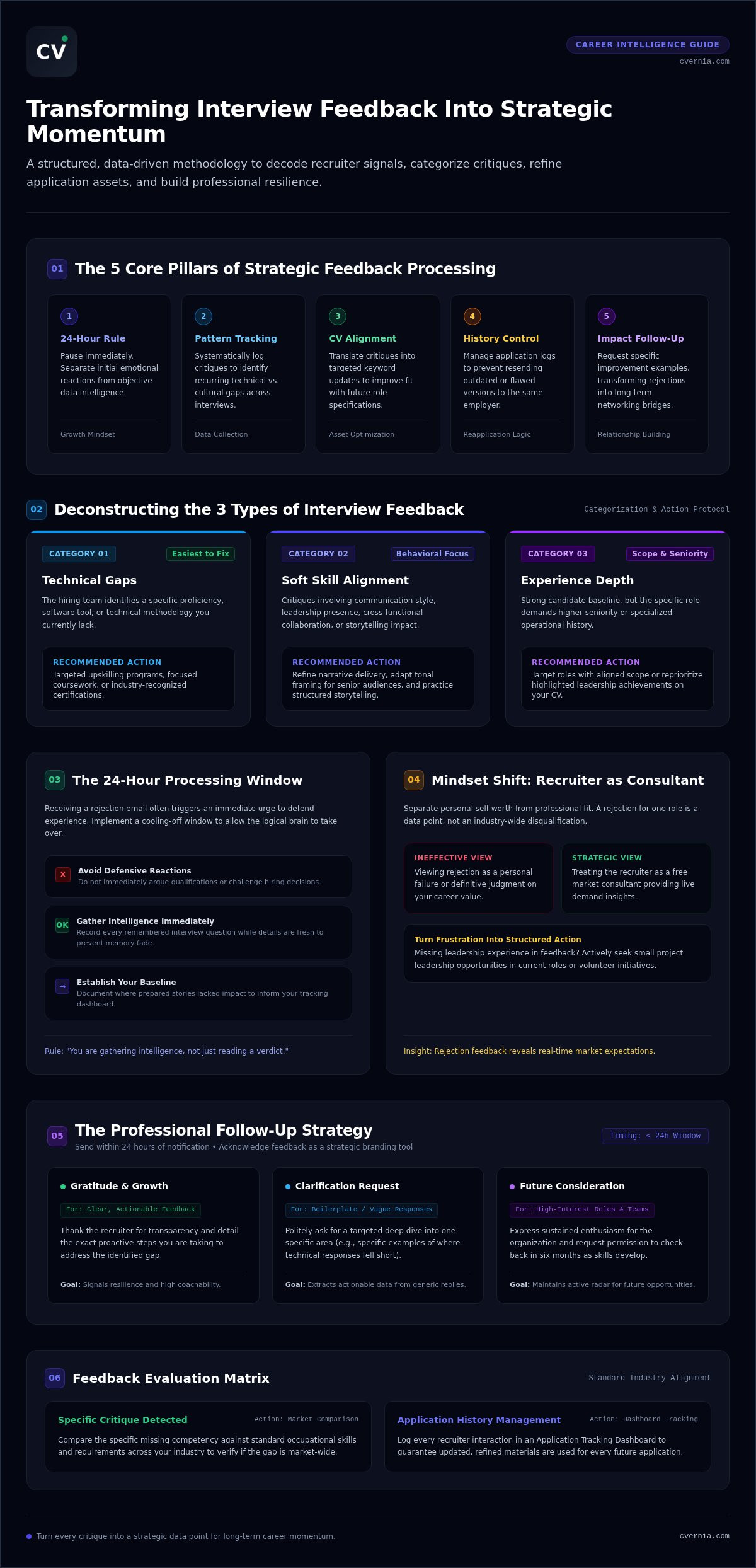
Receiving a rejection email often triggers an immediate urge to defend your experience or ask why you weren't chosen. Pause. Implement the 24-hour rule before you take any action. This cooling-off period allows your logical brain to take over from your emotional response. Use this window to reflect on the job interview process without the pressure of an immediate deadline. You are gathering intelligence, not just reading a verdict. Successful candidates treat every interaction as a learning opportunity rather than a final judgment on their abilities.
Distinguish between genuine constructive criticism and 'culture fit' boilerplate. Recruiters often use generic language to avoid legal complications. If the feedback mentions specific technical skills or behavioral examples, you have found gold. If it's vague, your own documentation becomes the primary source of truth. Write down every question you remember while the details are fresh. This practice helps you decide what to do with interview feedback by highlighting where your prepared stories might have lacked impact. Recording these details immediately prevents memory fade and provides a clear baseline for improvement.
Identifying the Three Types of Interview Feedback
Effective analysis requires categorization. Feedback generally falls into three distinct buckets that dictate your next steps. Understanding these categories helps you prioritize your professional development:
- Technical gaps: The hiring team identified a specific skill or software proficiency you lack. This is the easiest type to fix with targeted learning or certifications.
- Soft skill alignment: This involves how you communicate, lead, or collaborate. It might mean you need to refine your storytelling or adjust your tone for different audience levels.
- Experience depth: You might be a great candidate, but the role requires more seniority or specialized history. This is a sign that you should target roles with slightly different scopes or emphasize different parts of your background.
Managing the Emotional Response to Rejection
Separate your personal worth from professional fit. A 'no' for this specific role is simply a data point in your broader career journey. It doesn't mean you are unqualified for the industry. Shift your mindset to view the recruiter as a market consultant. They are providing free insight into what the current market demands. Turn your frustration into a structured to-do list. If they mentioned a lack of leadership experience, look for a small project to lead in your current role or volunteer space. Use every critique to build a more resilient version of your professional self. This proactive approach transforms rejection into a strategic advantage for your next application.
The Professional Follow-Up: How to Ask for and Acknowledge Feedback
Your response to a rejection email is a powerful branding tool. It signals to the recruiter that you are resilient and coachable. When deciding what to do with interview feedback, prioritize maintaining the connection through professional grace. Send a brief message within 24 hours of receiving the news. This isn't the time to argue or relitigate your qualifications. Instead, thank them for their time and the opportunity to learn about the team. If the feedback is vague, politely ask for a 'deep dive' into one specific area. You might say, "I'd appreciate any specific examples of where my technical responses fell short." This shows you're serious about growth. When you receive a specific critique about a missing competency, compare it against the standard occupational skills and requirements for your industry to see if the gap is a market-wide expectation. Managing these follow-ups effectively is easier when you use an Application Tracking Dashboard to document every recruiter interaction.
Email Templates for Acknowledging Feedback
Use a 'Gratitude and Growth' template when you receive clear, actionable advice. Start by thanking them for the transparency and mention how you plan to address the gap. If the response was boilerplate, use a 'Clarification' template. Ask if there was a specific skill or experience level they preferred. For roles you loved, the 'Future Consideration' template is vital. Express continued interest in the company and ask if you can check back in six months. This keeps you on their radar for 2026 roles without being pushy. Professionalism in these final steps often keeps the door open for future openings.
When Not to Ask for More Feedback
Learn to recognize when a conversation has reached its natural end. If a recruiter hasn't replied after two polite follow-ups, they might be ghosting or simply overwhelmed. Some companies have strict legal policies that prevent them from sharing detailed notes. If you've asked once and received a generic "we went with a better fit" response, don't press further. Stop the conversation and focus your energy on your next lead. Your time is too valuable to spend chasing a dead end when you could be refining your next application. Knowing when to walk away preserves your dignity and your professional reputation.
Analyzing Feedback Patterns: Technical vs. Cultural Gaps
Identifying recurring themes is the only way to move from guesswork to a data-driven strategy. If you've had multiple interviews, look for common threads in the responses you receive. Using a job interview tracker helps you visualize these patterns over time. You might notice that while your technical skills pass the initial screen, you often stall at the final cultural round. This data tells you exactly what to do with interview feedback to break the cycle. Pay attention to "silent feedback" as well. If interviewers consistently skip over your leadership experience despite it being a requirement, your current stories might not be signaling that expertise clearly enough.
A common hurdle involves the disconnect between your written profile and your verbal performance. You might have an ats compliant resume that successfully promises high-level expertise, but if your interview answers lack depth, the hiring manager will feel a sense of misalignment. Compare the feedback from different stages of the process. HR screens focus on high-level fit and salary expectations, while technical rounds scrutinize your specific execution. If you consistently fail at the technical stage, your resume might be over-promising on skills you haven't yet mastered in a live environment. Alignment is the key to building trust with a hiring team.
Addressing Technical Skill Deficiencies
Transform technical critiques into a concrete learning roadmap. If you couldn't answer specific questions about a framework or methodology, treat those questions as a curriculum for your next two weeks. Benchmarking your current abilities against occupational skill requirements and career outlook data ensures you are focusing on the competencies that actually drive hiring decisions in 2026. Highlight relevant projects in your next application to bridge any identified experience gaps. You can also leverage the CVernia Career Academy to find specialized resources that turn these identified weaknesses into documented strengths.
Refining Your Cultural and Soft Skill Narrative
Cultural fit is often a code for communication style and values alignment. If feedback suggests a lack of "fit," revisit your 'About Me' section to ensure it reflects your actual working style rather than a generic professional persona. Practice the STAR method (Situation, Task, Action, Result) for the specific behavioral questions that previously tripped you up. This structure ensures your soft skills are backed by hard evidence. Aligning your personal brand with industry standards requires you to be both authentic and strategically prepared. Refine your narrative until it feels like a natural extension of your professional identity.
Implementing Changes: Updating Your CV and Cover Letter Strategy
Don't let valuable critiques gather dust in a notebook. Knowing what to do with interview feedback involves more than just reflection; it requires tangible updates to your application materials. If a recruiter mentioned that your technical expertise didn't come across clearly, your CV needs a structural pivot. This doesn't mean you should invent new experiences. Instead, focus on elevating the visibility of the skills you already possess. You must ensure your documents remain 100% truthful while realigning your priorities to match current market demands. Modern hiring relies on precision. Understanding how applicant tracking systems work is essential here, as these systems validate whether your updated keywords actually align with the roles you want.
Cultural fit concerns are often the result of a misaligned narrative. If feedback suggests you didn't seem like a "fit" for a specific team dynamic, revisit your introductory materials. You can use a tailored cover letter generator to adjust your tone and highlight values that resonate with your target industry. A cover letter is your best tool for addressing perceived gaps before you even step into the room. It allows you to frame your history in a way that directly answers the concerns raised in previous interviews. Optimize your documents now with Tailored CV & Cover Letter Creation to ensure your next application hits the mark.
Keyword Optimization Based on Real-World Critiques
Treat every specific critique as a keyword hint. If an interviewer noted a lack of 'Stakeholder Management' experience, find every instance in your history where you collaborated with different departments and bring those to the forefront. Use ATS analysis to verify if your new version ranks higher for the specific roles you are targeting in 2026. A simple pivot can make a massive difference. For example, change a generic bullet point like "Worked with teams" to "Coordinated cross-functional project delivery" to address a perceived lack of leadership depth. These small, data-driven adjustments transform your CV from a static document into a dynamic career tool.
Version Management: Don't Lose Your Progress
Tracking your growth requires strict version control. Maintaining a 'Master CV' alongside a 'Version 2.0' allows you to see exactly how your strategy is evolving. Label your applications clearly so you know which specific piece of feedback influenced each update. This organized approach prevents you from repeating past mistakes and helps you identify which document versions are securing the most interviews. Using CVernia's version management tools makes it easy to compare the success rates of different strategies. You'll move forward with the confidence that your application materials are getting stronger with every iteration. Stay organized, stay truthful, and stay focused on the next offer.
Strategic Reapplication: Turning Today's 'No' into Tomorrow's 'Yes'
Many candidates believe that a rejection email from a dream company means they are permanently blacklisted. This is a myth that prevents talented professionals from pursuing great opportunities. In reality, a previous application provides a unique blueprint for future success. When you are deciding what to do with interview feedback, consider the long game. Reapplying to the same firm after six months shows persistence and a commitment to growth. Use your previous experience as a competitive advantage. You already know their interview style, their cultural values, and exactly where your previous profile fell short. This insider knowledge is a strategic asset that new applicants simply don't have.
Leveraging your stored interview notes allows you to prepare for a second chance with surgical precision. If you were told your project management experience was too narrow, your next application should lead with a broader portfolio of cross-functional wins. When you draft your new cover letter, don't be afraid to reference your growth. Briefly mention the specific feedback you received and explain the concrete steps you've taken to address those areas. This transparency proves you are coachable and proactive. To ensure you don't repeat past mistakes, use Smart Reapplication Detection. This tool helps you avoid sending the same flawed CV version twice, ensuring every new touchpoint with the recruiter reflects your current, improved expertise.
The Reapplication Checklist
Before you hit submit on a new application for a familiar company, verify that you are truly ready. A premature reapplication can signal a lack of self-awareness. Follow these steps to maximize your chances:
- Step 1: Verify you have addressed at least 70% of the previous feedback. If they wanted a specific certification or skill, ensure it is now clearly documented in your history.
- Step 2: Update your CV compatibility score for the new job description. Even if the role title is the same, requirements often shift over time.
- Step 3: Reach out to your previous recruiter. A polite message signaling your continued interest and highlighting your recent growth can often bypass the initial screening phase.
Using CVernia to Manage Your Long-Term Journey
Success in a modern career transition requires more than just luck; it requires a centralized system. A professional dashboard keeps your interview notes and feedback organized so you never lose a valuable insight. You can set reminders for reapplication windows, which typically open every six months. This methodical approach ensures you stay on the radar of top employers without being overbearing. By treating every 'no' as a data point, you build a resilient strategy that eventually leads to a 'yes'. Start managing your career strategically with CVernia's dashboard today and turn your previous critiques into your next job offer.
Master Your Next Move with Strategic Insights
Rejection isn't an end point; it's the raw data you need to secure your next offer. By applying the 24-hour rule and categorizing critiques into technical or cultural gaps, you take control of your career narrative. You now have a clear roadmap for what to do with interview feedback to ensure every application is stronger than the last. Use these insights to refine your CV and cover letter, focusing on truthful representation that aligns with 2026 market standards.
Success in today's competitive landscape requires organization and precision. Track your interview notes and master your feedback with CVernia to turn every conversation into a strategic advantage. Our platform offers a Centralized Application Tracking Dashboard and Smart Version Management for CVs to help you monitor your progress. You can also leverage 2026 ATS Compatibility Analysis to verify that your updates meet the latest hiring requirements. You've done the hard work of interviewing. Now, let's make sure that effort pays off in your next role. You have the skills; we provide the system to showcase them effectively.
Frequently Asked Questions
What should I do if the interview feedback is very vague?
If feedback is vague, politely ask for a specific example related to a skill or behavioral competency. Focus on one area rather than asking for a full report. For instance, ask if there was a specific technical proficiency or experience level they felt was missing. If you still receive no clarity, rely on your personal interview notes to identify where your answers lacked depth or impact during the conversation.
How long should I wait to reapply after receiving negative feedback?
Wait at least six months before reapplying to the same company. This window provides enough time to realistically address the gaps identified in your previous attempt. Use this period to gain certifications, lead new projects, or refine your technical skills. Reapplying too soon suggests you haven't taken the critiques seriously. Most organizations view a six month gap as evidence of significant professional growth and dedication.
Is it okay to ask for feedback if they didn't offer it?
It is absolutely appropriate to ask for feedback if it wasn't provided in the rejection email. Recruiters often wait for a candidate to show interest before sharing detailed notes. Send a professional request within 48 hours of the news. Frame your request as a desire for professional development rather than a challenge to their decision. This proactive approach shows you are a growth oriented professional worth keeping in their talent pipeline.
Can interview feedback help me improve my ATS score?
Interview feedback is a vital tool for improving your ATS score because it highlights specific keywords recruiters are scanning for. If you are wondering what to do with interview feedback that mentions a lack of specific software or methodology, add those terms to your CV history. CVernia's compatibility analysis can then verify if your updated version better aligns with industry job descriptions. Aligning your verbal feedback with your written profile is essential for beating the bot.
What if I disagree with the feedback given by the hiring manager?
Treat feedback you disagree with as valuable data on how you are perceived by others. Even if the critique feels inaccurate, it indicates that your communication didn't successfully convey your true expertise. Don't argue with the hiring manager. Instead, adjust your storytelling or clarify your achievements in future interviews. Use the disagreement as a prompt to refine how you present your skills so there is no room for misinterpretation next time.
How do I organize interview feedback for multiple job applications?
Organize your insights using a centralized application tracking dashboard to identify patterns across different companies. Document the date, the specific interviewer, and the core critiques for every role. This systematic approach helps you see if multiple firms are pointing out the same skill gap. CVernia allows you to manage interview notes and attachments in one place, making it easier to see what to do with interview feedback as you move through your career journey.
Should I mention previous feedback in my next interview with a different company?
You should not explicitly mention that you received negative feedback from a previous employer during an interview with a new company. Instead, use the lessons learned to proactively address potential concerns. If a past interviewer noted a lack of leadership, lead your current interview with a strong story about a time you managed a project. Use the feedback to strengthen your narrative without highlighting past rejections to your new potential employer.
How can I tell if the feedback is a 'canned' response or genuine?
Genuine feedback usually references specific moments or technical answers from your conversation. Look for mentions of particular skills, certifications, or behavioral examples you discussed. Canned responses are often brief and use generic phrases like "other candidates were a closer fit" or "lack of experience." If the message sounds like it could apply to anyone, it's likely a boilerplate response. Specificity is the clearest sign that a recruiter is offering sincere advice.


