

What if the very tool you're using to organize your career is actually the thing slowing you down? You've likely spent hours manually updating cells, yet you still find yourself searching for a job application tracker spreadsheet alternative because your current file is a mess of outdated rows and missed deadlines. It's a common frustration for high-achieving professionals who feel like they're managing a tedious data entry project rather than a strategic career transition. While a basic file was once enough, the modern hiring market moves too fast for passive tools that don't offer real-time insights.
You deserve a system that works as hard as you do. In this guide, we'll explore why moving to an intelligent platform is the key to reclaiming your time and mental clarity. We'll show you how to move beyond static rows into a high-performance management ecosystem. You'll discover how a centralized dashboard, automatic follow-up reminders, and integrated version management can transform your search from a chaotic scramble into a streamlined path to your next role. Let's look at how to upgrade your strategy for 2026.
Key Takeaways
- Understand why manual data entry is the primary productivity killer for modern job seekers and how passive spreadsheets fail to prompt timely action.
- Identify the core components of a high-performance system, such as dynamic status triggers and centralized management for your tailored CV versions.
- Evaluate the strategic benefits of a dedicated job application tracker spreadsheet alternative that offers built-in ATS analysis and zero-minute setup times.
- Follow a streamlined process to migrate your existing data from a manual file into a centralized career hub in less than five minutes.
- Shift from passive tracking to active management by integrating version control and interview preparation directly into your application dashboard.
The Limits of the Job Application Tracker Spreadsheet in 2026
The spreadsheet has been a staple of the job search for decades, but it's quickly becoming a liability. While it offers a basic grid for your data, it lacks the intelligence required to navigate the high-speed hiring environment of 2026. You likely find yourself looking for a job application tracker spreadsheet alternative because manual entry has become a full-time job in itself. Static cells don't alert you when a deadline is approaching, nor do they help you adapt to the sophisticated filters used by recruiters. They are passive containers for information that should be active and working for you.
Manual Entry vs. Automated Application Management
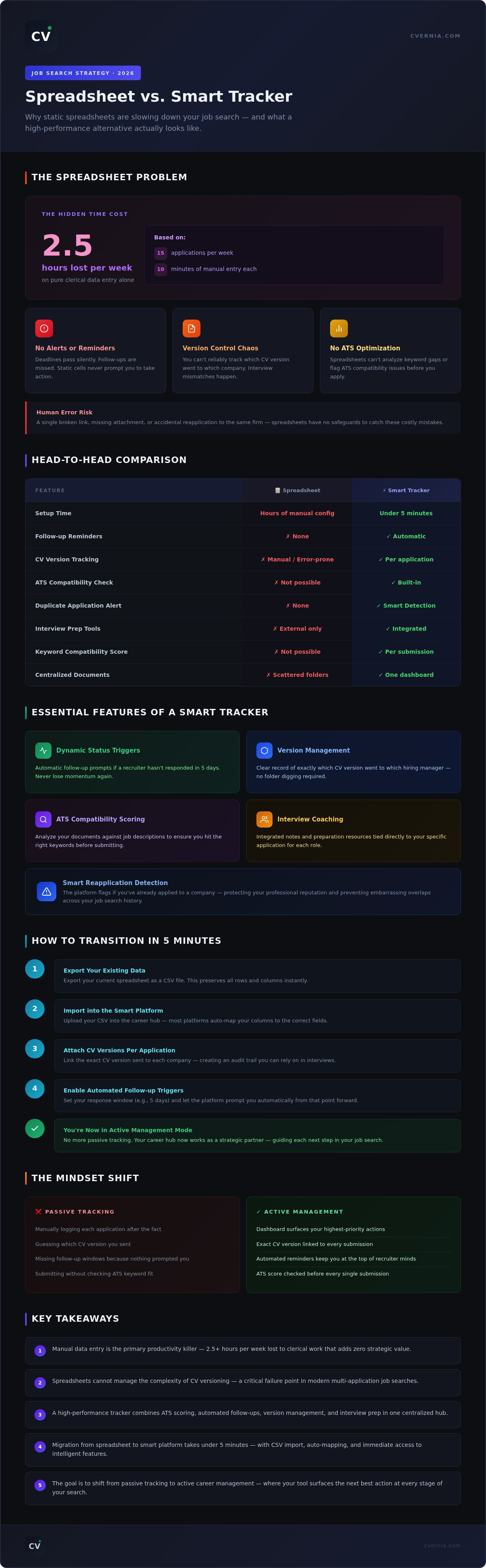
Think about the time you lose every week. If you spend just 10 minutes copying job descriptions, company URLs, and contact names for each of your 15 weekly applications, you've wasted two and a half hours on clerical work. This repetitive task creates a significant psychological burden. It transforms your career growth into a chore of managing a "dead" document that offers no feedback or encouragement. Transitioning to an automated platform lets you reclaim this time immediately. Instead of tedious data entry, you can focus on ats compliant resume creation. This shift ensures every submission is optimized for success rather than just recorded in a cell.
The Version Control Nightmare
Modern recruitment requires precision. You can't send the same generic CV to every firm and expect results. However, tracking which specific version went to which company in a standard grid is nearly impossible. It creates a dangerous scenario where you might walk into an interview prepared to discuss a set of skills that aren't on the version the recruiter is holding. Understanding how applicant tracking systems work shows that versioning is no longer optional. These systems store your data long-term, and inconsistencies between multiple applications can flag your profile. A spreadsheet simply cannot manage these complex relationships or provide the necessary alignment.
Beyond these structural issues, spreadsheets are prone to human error. A single broken link or a missing attachment can derail your momentum. Because a spreadsheet is passive, it won't remind you to follow up after an interview or alert you if you're reapplying to the same firm too soon. It's time to trade your manual tracker for a system that acts as a strategic partner in your professional journey.
Essential Features of a High-Performance Tracker
A high-performance system doesn't just store data; it drives your next move. When you choose a job application tracker spreadsheet alternative, you're upgrading to a tool that understands the nuances of the hiring cycle. Modern trackers offer dynamic status updates that automatically trigger follow-up workflows. If a recruiter hasn't responded in five days, the system prompts you to reach out. This proactive approach ensures you never lose momentum and stay at the forefront of a recruiter's mind. It moves you from a passive observer to an active participant in your career growth.
Centralized management is equally vital. Your dashboard should store every tailored CV, cover letter, and portfolio link in one place. This organization prevents the frantic search for documents before a call. High-performance trackers typically include several key technical advantages:
- Compatibility scoring: Analyze your documents against job descriptions to ensure you hit the right keywords before you hit submit.
- Interview coaching: Access integrated notes and preparation resources that are tied directly to your specific application.
- Version management: Maintain a clear record of exactly which CV version was sent to which hiring manager without digging through folders.
The Architecture of a 2026 Career Dashboard
A modern career hub moves beyond simple rows and columns. Transitioning to a job application tracker spreadsheet alternative allows you to leverage a relational structure that connects your efforts across different companies and roles. This architecture is essential for smart reapplication detection. It alerts you if you've applied to a company before, preventing embarrassing overlaps and helping you manage your professional reputation. Every entry should link seamlessly to a specific job interview tracker entry. This connection ensures that your preparation notes and interview performance are always tied to the correct application history.
Data Visualization: Seeing the Success Patterns
Success in a competitive market requires more than just high volume. You need to understand your conversion rates. An intelligent tracker visualizes your progress, showing you exactly how many applications turn into first-round interviews. This data reveals which versions of your CV are performing best. If one version gets a 20% response rate while another gets zero, you know exactly where to focus your energy. Identifying these patterns helps you stop guessing and start applying with confidence. It allows you to see if your strategy is yielding results or if you need to refine your approach for specific industries.
Use these insights to decide when to pivot your strategy. If the data shows a bottleneck at the final interview stage, you can dive into interview coaching resources to refine your performance. You can explore how an integrated dashboard simplifies this entire process by turning raw data into a clear roadmap for your career.
Spreadsheet vs. Dedicated Platform: A Comparison
Choosing a job application tracker spreadsheet alternative is the fastest way to professionalize your search. You can spend four hours building a custom spreadsheet from scratch, or you can use a platform that's ready in zero minutes. A dedicated system provides instant intelligence, like reapplication detection, that static text can't match. It's the difference between a simple filing cabinet and a strategic advisor that helps you make better decisions.
Accessibility matters when you're managing a busy schedule. Excel sheets are notoriously clunky on mobile devices, often requiring frustrating pinching and zooming just to read a single cell. A modern dashboard is built for the phone in your pocket, making it easy to check interview notes or update a status between meetings. These platforms also create a direct link between your tracker and your tailoring tools. You won't have to hunt for disconnected files; every application is permanently tied to the specific CV version you sent.
The Hidden Costs of 'Free' Spreadsheets
"Free" is often a misnomer in a professional context. If you spend an hour every week maintaining a manual tracker, you've sacrificed significant time over a three-month search. This is time you could have spent networking or refining your skills. There's also the cost of missed opportunities. Without automated follow-up reminders, a promising lead can easily go cold. In a competitive 2026 market, relying on a manual system often leads to underwhelming results because it lacks the proactive edge needed to stay ahead of other candidates.
Security and Longevity of Your Career Data
Your career history is a valuable asset. Local files are vulnerable to hardware failure, accidental deletion, or even just being misplaced in a cluttered folder. Cloud-based platforms provide a secure, multi-year history of your professional journey. You won't have to worry about losing your data or hunting for a file named "JobSearch_Final_v3.xlsx" two years from now. Modern platforms also prioritize privacy, ensuring your sensitive data is handled with professional-grade security protocols. This longevity allows you to build a comprehensive record of your growth and successes that stays with you throughout your entire career.
How to Transition from Manual Tracking to Smart Management
Moving from a cluttered file to a professional system is a pivotal moment in your career journey. You've likely felt the weight of an unorganized spreadsheet, but finding a job application tracker spreadsheet alternative isn't just about changing where you store data. It's about changing how you work. Start by exporting your current data into a clean CSV file. This is your chance to leave behind the broken links and outdated notes that have been cluttering your view. You'll find that once the noise is gone, your path forward becomes much clearer.
Step 1: The Audit of Your Current Search
Audit your current process before you migrate. Look closely at your columns. Are you actually using every field, or is half the sheet empty? Identify the core data points like company name, role title, and submission date that truly drive your progress. This audit helps you spot where you've lost information in the past, such as forgotten follow-up dates or misplaced portfolio links. Take a moment to write one single sentence defining your primary career goal for the next 90 days. This clarity will guide your setup and keep you focused on high-value activities rather than busy work.
Step 2: Implementing the Smart Dashboard
Implementing a job search management system takes under five minutes. Once you've uploaded your cleaned data, begin mapping your existing CV versions to active applications. This ensures you always know exactly which profile you presented to each employer. Configure your notification system immediately. Set up your first 'Smart Reapplication' alert to avoid contacting the same firm too frequently. Integrate your interview notes directly into the application timeline so they're ready for your next conversation. This centralized hub transforms your search into a manageable, high-performance operation.
This transition isn't just a technical upgrade; it's a strategic mindset shift. You're moving from a passive recorder of events to an active manager of your professional future. By automating the clerical side of your search, you free up mental energy for what really matters: performing at your best during interviews. If you're ready to leave the cells behind and professionalize your process, you can start building your smart dashboard today and experience the difference of an integrated system.
CVernia: The Intelligent Alternative to the Spreadsheet Tracker
CVernia represents the next evolution in career management. It's built specifically for the high-volume seeker who refuses to sacrifice quality for speed. When you choose CVernia as your job application tracker spreadsheet alternative, you're not just moving your data to a prettier grid. You're adopting a system that understands the mechanics of modern hiring. The platform integrates ATS analysis directly into your dashboard, providing a compatibility score for every role before you even hit submit. This ensures your documents are always optimized to beat the bots and reach a human recruiter.
Strategy is about learning from every interaction. CVernia features smart reapplication detection that helps you turn past rejections into future opportunities. The system tracks your history with specific companies, alerting you if you're attempting to reapply too soon or if a previous contact is already in your network. This level of intelligence is impossible to maintain in a manual file. It transforms your search from a series of disconnected events into a cohesive, long-term professional strategy.
Tailoring and Tracking in One Ecosystem
CVernia eliminates the frustrating gap between writing your CV and tracking your progress. In a traditional setup, these are two separate tasks that often fall out of sync. With CVernia, they live in one ecosystem. You can create tailored versions of your CV and cover letter, and the platform automatically links them to the correct application entry. This version management ensures total alignment. You'll never have to guess which skills you highlighted for a specific role because the evidence is always one click away. It maintains a truthful, high-compatibility profile without the manual effort of managing dozens of local files.
Your Digital Mentor: More Than Just a Tracker
Think of CVernia as your digital mentor. Beyond the dashboard, you gain access to the Career Academy, a suite of learning resources designed to improve your success rate at every stage of the funnel. You can store interview notes, manage attachments, and review preparation guides all within the same interface. This level of preparedness builds the self-assurance you need to excel in high-stakes conversations. The platform doesn't just record where you've been; it prepares you for where you're going. It's time to stop fighting with rows and start leveraging a strategic ally that's invested in your success.
Start managing your career strategy with CVernia today.
Take Command of Your Career Strategy
The manual era of job hunting is over. You've seen how static cells and disconnected files create a ceiling on your professional growth. By moving to a centralized dashboard, you eliminate the clerical burden of data entry and gain a strategic partner that actively guides your next move. You'll transition from merely recording applications to mastering them through integrated ATS analysis and precise version management for every tailored CV. This shift ensures your profile is always aligned with what recruiters are looking for in 2026.
Choosing a job application tracker spreadsheet alternative is the first step toward reclaiming your time and mental clarity. You no longer have to worry about missing follow-up deadlines or losing track of your application history. With smart reapplication detection, you can navigate the hiring landscape with the confidence of a seasoned professional who is always one step ahead. It's about moving from uncertainty to total readiness.
Upgrade your job search from a spreadsheet to CVernia's intelligent dashboard to start seeing the patterns of your success. It's time to trade your manual tracker for a high-performance system that works as hard as you do. Your next role is waiting, and you're now fully prepared to go out and get it.
Frequently Asked Questions
Is a job application tracker spreadsheet still useful in 2026?
While a spreadsheet is better than no organization at all, its utility is declining. It remains a passive tool that requires significant manual labor to stay current. High-speed hiring cycles demand proactive systems that alert you to follow-ups and analyze your CV quality. If you want a competitive edge, you need a job application tracker spreadsheet alternative that automates clerical tasks. This allows you to focus on strategy rather than updating rows.
What are the best free alternatives to a job search spreadsheet?
Many seekers look for basic kanban boards or list tools as free options. However, these still lack the career-specific intelligence needed for a modern search. Dedicated platforms often offer free tiers that include specialized features like reapplication detection and version management. These tools are superior because they're purpose-built for the recruitment lifecycle. They provide structured data fields that a generic project management tool simply cannot match for you.
How do I track multiple versions of my CV for different jobs?
Effective version tracking requires a system that links specific files directly to individual job entries. In a manual spreadsheet, this often leads to a mess of file names and broken links. A dedicated management platform solves this by hosting your tailored CVs in a centralized dashboard. You can see at a glance which skills you emphasized for a specific role. This ensures total alignment during interviews and prevents the embarrassment of referencing the wrong resume.
Can an application tracker help me beat the ATS?
Yes, a high-performance tracker integrated with ATS analysis can significantly improve your odds. These tools scan your CV against specific job descriptions to identify keyword gaps and formatting issues. By addressing these before you submit, you ensure your profile meets the technical requirements of the applicant tracking system. This moves your application past the initial automated filter and into the hands of a human recruiter, where your true value can finally be seen.
What is smart reapplication detection and why do I need it?
Smart reapplication detection is an automated feature that flags if you've previously applied to a specific company or role. You need it to protect your professional reputation and avoid redundant outreach. Applying too frequently to the same firm can appear disorganized to recruiters. This feature analyzes your history to ensure your timing is strategic. It helps you maintain a respectful distance while keeping your profile fresh in their talent pipeline for future openings.
How much time can I save by using an automated application dashboard?
You can save several hours every week by eliminating manual data entry and clerical organization. Instead of copying job descriptions and contact details into a sheet, an automated system captures this data instantly. This shift allows you to redirect your energy toward high-value activities like networking. Professionals often report that moving to a job application tracker spreadsheet alternative reduces their administrative workload by half, making the entire search feel much less overwhelming.
Should I include interview notes in my application tracker?
Including interview notes is essential for long-term career growth. Recording specific questions asked, the names of interviewers, and your own performance reflections helps you prepare for subsequent rounds. Storing these notes directly within the application entry ensures they're contextually relevant. You can review past interactions in seconds before a follow-up call. This level of preparedness demonstrates your attention to detail and genuine interest in the company, which sets you apart from other candidates.
Is it safe to store my job application data on a third-party platform?
Security is a top priority for modern career management platforms. Unlike local spreadsheets that are vulnerable to data loss or accidental deletion, cloud-based systems use professional-grade encryption to protect your sensitive information. These platforms follow strict privacy protocols to ensure your career history and contact details remain confidential. Storing your data on a dedicated platform provides a secure, multi-year record of your professional journey that you can access from any device at any time.


