
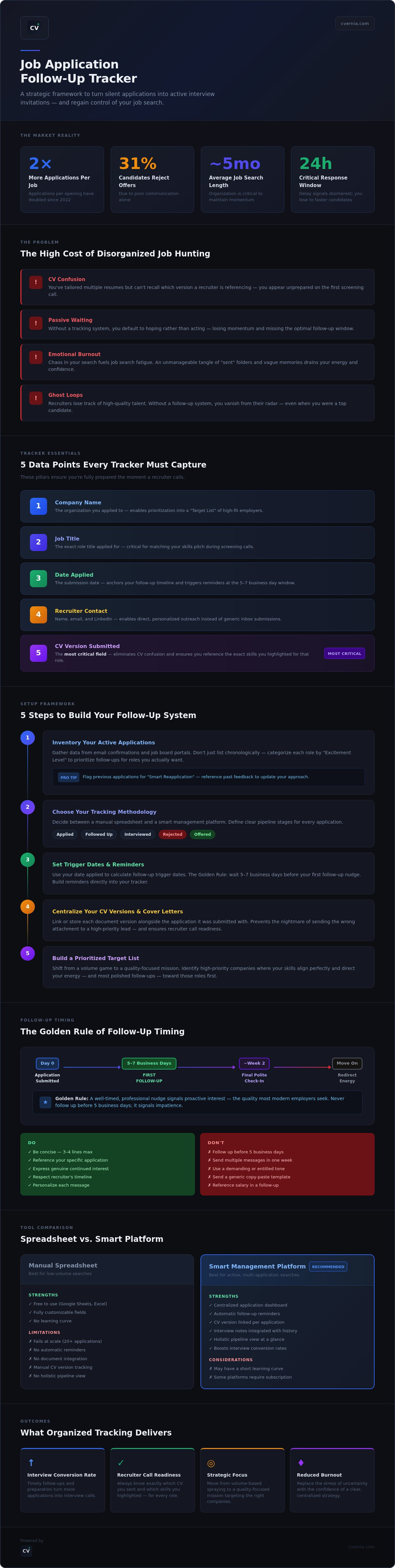
Did you know that applications per job opening have doubled since 2022, yet 31% of candidates still walk away from offers simply because of poor communication? In a market where the average job search now stretches to nearly five months, a professional job application follow up tracker isn't just a bonus; it's your competitive edge. You've likely felt the frustration of staring at a messy spreadsheet, wondering which version of your CV you sent to that top-tier firm last Tuesday. It's exhausting to manage multiple versions of your professional identity while trying to hit the perfect follow-up window without feeling like a nuisance.
We understand that the manual hustle of job hunting is draining. This guide will show you how to regain control and turn those silent applications into active interview invitations. We provide a clear, step-by-step framework for building a system that manages your attachments, tracks your progress, and triggers timely reminders. You'll learn how to move from a scattered approach to a centralized dashboard that boosts your interview conversion rates and keeps you prepared for every recruiter call. It's time to replace the stress of uncertainty with the confidence of a well-organized strategy.
Key Takeaways
- Transform your job search from a chaotic list of sent emails into a strategic pipeline that turns silence into interview opportunities.
- Identify the core data points your job application follow up tracker must include to maintain clarity across multiple CV versions and companies.
- Evaluate whether a manual spreadsheet or a smart management platform better supports your volume of applications and technical needs.
- Apply the Golden Rule of Timing to your follow-up emails, ensuring your persistence remains professional and welcomed by hiring managers.
- Centralize your application history and notes in one dashboard to eliminate overwhelm and prepare effectively for every recruiter call.
Why a Job Application Follow-Up Tracker is Your Secret Search Weapon
A job application follow up tracker is a centralized system designed to monitor your application status, specific contact points, and engagement timelines. It moves you away from passive waiting and into active career management. While most employers rely on an applicant tracking system to filter and organize candidates, you need your own mirror system to ensure you don't get lost in their digital shuffle. This isn't just about data entry; it's about shifting your mindset from a hopeful applicant to a strategic professional who values their own time and career trajectory.
Ghosting is a two-way street that often stems from a lack of organization. Research suggests that poor communication is a primary reason why candidates decline offers, and the same applies to recruiters who lose track of high-quality talent. By implementing a structured follow-up, you bridge that communication gap. Some industry professionals report that a well-timed, professional nudge can significantly increase your chances of being noticed in a crowded inbox, as it demonstrates the proactive nature most modern companies crave.
The Cost of Disorganized Job Hunting
Disorganization carries a high price tag in a competitive market. A mere 24-hour delay in responding to an interview request can signal a lack of interest, potentially costing you the role to a faster candidate. Even more dangerous is CV confusion. If you've tailored multiple resumes but can't remember which version a specific recruiter is referencing, you risk appearing unprepared during that crucial first screening call. This chaos fuels emotional burnout. When your search feels like an unmanageable tangle of "sent" folders and vague memories, job search fatigue sets in quickly.
Follow-Up Tracking as a Competitive Advantage
Organized tracking transforms your search from a volume game into a quality-focused mission. It allows you to build a "Target List" of high-priority companies where your skills align perfectly. Persistence is a powerful signal. When you follow up, you aren't just asking for an update; you're demonstrating high interest and professional follow-through. This level of organization naturally boosts your confidence during interviews because you're fully prepared with the history of your engagement. A job application follow up tracker serves as a professional commitment to your career growth, ensuring that every opportunity you pursue is handled with the precision it deserves.
5 Steps to Setting Up Your Follow-Up System
Building an effective job application follow up tracker requires more than just a list of company names. It's a strategic framework that captures the specific nuances of your professional outreach. To truly organize your job search, you must document five essential pillars: the company name, job title, date applied, the specific recruiter contacts, and, most importantly, the exact CV version you submitted. This level of detail ensures that when a recruiter calls, you aren't scrambling to remember which skills you highlighted for that specific role.
Step 1: Inventory Your Active Applications
Start by gathering data from your email confirmations and job board portals. Don't just list them chronologically; categorize each role by your "Excitement Level." This allows you to prioritize follow-ups for the positions you actually want. During this inventory, look for "Smart Reapplication" opportunities. If you've applied to a company before, your tracker should flag this history so you can reference previous interactions or update your approach based on past feedback. Centralizing your tailored cover letters and CVs in one place at this stage prevents the common nightmare of sending the wrong attachment to a high-priority lead.
Step 2: Choosing Your Tracking Methodology
You must decide between a manual approach and a job search management system. While a manual list works for low-volume searches, it often fails as your application count grows. A digital dashboard provides a holistic view, integrating interview notes directly with your application history. Within your chosen system, define clear stages: Applied, Followed Up, Interviewed, Rejected, or Offered. Use these stages to set "Trigger Dates." A standard 5-7 business day window is the golden rule for your first follow-up.
Log every recruiter contact you encounter, including their names and LinkedIn profiles. Having this information at your fingertips allows for rapid, personalized outreach that feels professional rather than automated. If you're feeling overwhelmed by manual data entry, a centralized Application Tracking Dashboard can automate these reminders for you. This ensures you never miss a follow-up window, turning potential ghosting into a scheduled opportunity for engagement. Persistence matters, but organized persistence wins the role.
Spreadsheets vs. Smart Platforms: Evaluating Your Options
Choosing the right job application follow up tracker often comes down to a choice between total customization and high-level efficiency. While a basic spreadsheet offers flexibility, it lacks the automation necessary to manage a modern career search effectively. As your application volume increases from five to fifty roles, manual entry becomes a bottleneck rather than a tool. You need a system that grows with your ambitions while keeping your sensitive career data secure and private. Relying on a static document often means missing the subtle cues that turn a sent resume into an active interview.
The Limits of the Traditional Spreadsheet
Manual spreadsheets are static. They don't nudge you when a follow-up window is closing, nor do they offer insights into how applicant tracking systems work. Linking the correct PDF version to a specific row is a manual chore that often leads to version control nightmares. If you can't see at a glance which CV version you sent to which hiring manager, you're operating at a disadvantage. This lack of integration means you're spending more time managing data than preparing for interviews. Most spreadsheets also lack the sophisticated security protocols required to protect your personal history and professional attachments over the long term.
The Rise of Career Application Management Platforms
Modern platforms replace disconnected files with a centralized dashboard. These systems offer smart detection, automatically identifying if you've interacted with a company previously to prevent redundant or conflicting applications. Integrated tools, such as a tailored cover letter generator, ensure that every piece of your application is aligned and tracked in one place. This holistic approach provides hidden features like interview preparation guidance and version management that a simple grid simply can't replicate. You gain a strategic overview that turns raw data into actionable career insights.
Scalability is the true test of any tracking system. Handling dozens of simultaneous applications requires clear reminders and automated status updates to avoid missing critical deadlines. A professional platform acts as a digital mentor, organizing your workflow so you can focus on high-value activities like networking and interview prep. It's about moving from a reactive list to a proactive strategy. By choosing a dedicated system, you ensure your career data is safe, organized, and ready to be leveraged for your next big move. This transition from manual entry to automated management alleviates the stress of the unknown, replacing it with the confidence of total preparedness.
Mastering Follow-Up Communication: Timing and Tone
Effective communication is the bridge between a sent application and a scheduled interview. While your job application follow up tracker tells you when to act, your tone determines how that action is received. In a landscape where 31% of candidates decline offers due to poor communication, your ability to remain professional and clear is a significant advantage. You must balance persistence with empathy, ensuring your outreach feels like a helpful nudge rather than a burden to a busy hiring manager. Every message you send should mirror the truthful representation of skills found in your tailored CV, maintaining a consistent professional brand.
Timing is your most critical variable. Follow the Golden Rule: send your first follow-up five to seven business days after your initial application. If silence persists, wait another week before sending a second, more concise message. Your final follow-up should occur two weeks after that, serving as a polite "break-up" email that leaves the door open for future opportunities. This structured approach prevents you from appearing desperate while keeping your name at the top of the recruiter's inbox. Handling "the silence" with grace proves you're a resilient professional who respects the hiring process.
The 3-Part Follow-Up Framework
Construct your messages using a proven three-part structure to maximize impact. Start with the Hook by referencing the specific role and the date you applied. This immediately provides context for the reader. Move into the Value Add, where you briefly restate why your experience aligns perfectly with the job description. Finally, use a clear Call to Action. Instead of a vague "checking in," make a polite request for a status update or a brief conversation about the next steps in the interview process. This clarity respects the recruiter's time and prompts a faster response.
Customizing for the Hiring Manager
Avoid the generic "check-in" trap by personalizing every interaction. Use your job interview tracker notes to reference specific details from the job posting or previous conversations. This shows you've done your homework and are genuinely invested in the company's success. Ensure your follow-up remains ats compliant resume friendly, as many modern systems parse follow-up emails back into your candidate profile. By staying organized, you turn a stressful waiting game into a strategic outreach campaign. Start managing your professional communication with a centralized Application Tracking Dashboard to ensure no opportunity slips through the cracks.
Centralizing Your Search with CVernia’s Application Dashboard
Managing a modern job search requires more than just persistence; it demands a sophisticated infrastructure. While manual spreadsheets often become digital graveyards of forgotten data, a professional job application follow up tracker provides a dynamic command center for your career. CVernia’s Application Tracking Dashboard replaces disconnected folders and messy notes with a single, streamlined interface. This centralized approach ensures that every detail, from the recruiter's name to the specific version of your CV, is always within reach. You no longer need to hunt through your "sent" folder to find what you told a specific hiring manager three weeks ago.
Precision is the hallmark of a successful search. Our platform features smart reapplication detection, which leverages your historical data to inform future strategies. If you apply to a company where you previously interviewed, the system flags that history, allowing you to build on past connections rather than starting from zero. This is paired with robust version management. Because you likely tailor your resume for different roles, our dashboard keeps every specific CV and cover letter version attached to the correct job entry. You can review the exact skills and keywords you highlighted before you ever pick up the phone for a screening call.
Beyond simple tracking, we provide the resources needed to master the hiring landscape. The Career Academy offers a deep dive into the hidden rules of recruitment, from ATS optimization to advanced interview techniques. This educational layer transforms the dashboard from a utility into a strategic mentor. You aren't just logging applications; you're developing the professional branding skills necessary to stand out in a crowded market.
Streamlining Your Daily Workflow
Efficiency starts the moment you open your laptop. Start your morning with a clear, automated list of follow-up tasks that highlight which windows are closing. This proactive structure eliminates the "what should I do next?" anxiety that leads to job search fatigue. When a recruiter surprises you with an unscheduled call, you can quickly access your interview notes and specific attachments in seconds. CVernia acts as a trusted companion that transforms the chaotic job search into a structured, manageable journey.
Preparing for the Interview Stage
A dedicated tracker helps you mentally transition from a hopeful applicant to a serious candidate. By leveraging dashboard insights, you can spot patterns in which CV versions are getting the most traction, allowing you to refine your approach in real time. Use these data points to prepare more effectively, focusing on the specific value propositions that resonate with your target employers. Organization is the foundation of interview confidence. Start organizing your job search with CVernia today and take the first step toward a more controlled and successful career transition.
Turn Every Application into a Strategic Opportunity
Mastering your job search requires more than just sending resumes into the void. It's about maintaining a professional presence through organized persistence and clear communication. By implementing a dedicated job application follow up tracker, you eliminate the stress of version control and the fear of missing critical deadlines. You've learned that timing your outreach perfectly and maintaining a consistent tone are the keys to turning silence into human conversation. Moving beyond manual spreadsheets allows you to focus on what truly matters: preparing for the interviews you've worked hard to earn.
CVernia provides the tools you need to navigate the modern hiring landscape with total confidence. Our platform offers ATS Analysis for every application, Smart Reapplication Detection, and precise Version Management for tailored CVs to ensure you're always presenting your best self. Take control of your job search with CVernia’s Application Tracking Dashboard and replace uncertainty with a clear path forward. Your next career milestone is within reach, and we're here to help you secure it with the precision of a seasoned professional. Start your journey toward a more organized and successful career today.
Frequently Asked Questions
How often should I follow up on a job application?
Follow up once every 5 to 7 business days until you have sent a maximum of three messages. Start your first outreach about a week after submitting your application if you haven't heard back. This rhythm demonstrates professional persistence without becoming a nuisance. Using a job application follow up tracker helps you visualize these windows so you never send a message too early or let a lead go cold for too long.
What should I do if a recruiter doesn't respond to my follow-up?
Shift your focus to new opportunities while keeping the door open for future engagement. If a recruiter goes dark after your second or third attempt, it often indicates a shift in their internal hiring priorities rather than a reflection of your qualifications. Use your tracker to mark the application as "Cold" and set a reminder to check back in three months. This organized approach prevents emotional burnout and keeps your search moving forward.
Is it better to follow up via email or LinkedIn?
Prioritize email for your primary follow-up as it is the standard channel for professional recruitment records. LinkedIn is an excellent secondary tool for building rapport or if you have a mutual connection at the company. If you choose LinkedIn, keep your message brief and reference your emailed application. Most hiring managers prefer email because it allows them to easily forward your details to the relevant department or attach them to your candidate profile.
Can a follow-up tracker help me with ATS compatibility?
Yes, a sophisticated job application follow up tracker helps by documenting the specific keywords and skills you used in each tailored version. By tracking which versions successfully pass through the applicant tracking system and land interviews, you can refine your strategy for future roles. This data-driven approach ensures that your follow-up messages align perfectly with the optimized content the recruiter has already screened, reinforcing your suitability for the position.
Should I follow up even if the job posting says 'no phone calls'?
Follow up via email even when phone calls are discouraged. The "no phone calls" rule is designed to prevent disruptions to the recruiter’s daily workflow, but it does not forbid professional digital outreach. Sending a polite, well-timed email demonstrates that you respect their boundaries while remaining highly interested in the role. Always stick to written communication in these instances to show you can follow instructions while still showing initiative.
What are the most important fields to include in a job tracker?
Include the company name, job title, date applied, recruiter contact details, and the specific CV version used. You should also track the "Next Action Date" to trigger your follow-up reminders. Adding a field for interview notes and "Excitement Level" helps you prioritize your efforts. A centralized dashboard that manages these fields automatically reduces manual errors and ensures you have all the necessary context before every recruiter interaction.
How do I track multiple versions of my CV for different roles?
Assign a unique name or version number to every tailored CV and link it directly to the corresponding job entry in your tracker. This prevents the common mistake of referencing the wrong skills during a screening call. Using a management platform with built-in version control is more effective than manual folders. It allows you to see at a glance exactly which professional identity you presented to each specific hiring manager.
Is it okay to follow up more than once?
Yes, it is professional to follow up up to three times before moving on. Space these interactions at least one week apart to give the hiring team time to process their internal feedback. Your second and third messages should be increasingly concise, focusing on your continued interest and value. If there is still no response after the third attempt, move the application to your archive to maintain a productive and positive search.


